
Heating in a Listed Building? What Options Are Available?
Heating in a listed building and modernizing the heating in a listed building often present owners with special challenges. While many technical options can be freely planned in new buildings, the specifications of the listed building must be taken into account in historic buildings. Changes to the façade, building fabric or room structure are often only possible to a limited extent. At the same time, the heating technology must function reliably and improve living comfort .
The central question is therefore usually: Which heating system is permitted and sensible in a listed building? The answer largely depends on the building's condition, the existing heating technology, and the possibilities for structural integration. A concept that considers both the requirements of heritage conservation and the technical demands of modern heating systems is crucial.

Heating in a listed building. Heating systems in heritage-protected buildings must be planned with particular care.
In listed buildings, the preservation of historical substance is paramount. This means that technical changes are often only possible to a limited extent. New pipes, outdoor units, or major interventions in the building structure must in many cases be coordinated with the responsible heritage conservation authority.
- ✔ Historical facades often cannot be altered
- ✔ Visible outdoor equipment is often not permitted
- ✔ Interventions in original building fabric should be minimized
- ✔ The room structure of historical buildings should be preserved
Precisely for this reason, heating solutions are needed that can be integrated into the building as inconspicuously as possible and function without major structural changes.
Typical Requirements for Heating in a Listed Building
For a heating solution in heritage conservation to function long-term, it should meet several requirements. In addition to technical efficiency, integration into the existing building structure plays a particularly important role.
| Requirement | Why it is important |
|---|---|
| Minimal intervention in the building structure | Historical materials and constructions should be preserved. |
| Inconspicuous integration | Technology should not alter the building's appearance. |
| Flexible retrofitting | Many buildings can only be modernized gradually. |
| Good heat distribution | Historical buildings often have different room geometries. |
Which Heating Solutions are Suitable for Listed Buildings
Surface Heating in Walls or Ceilings
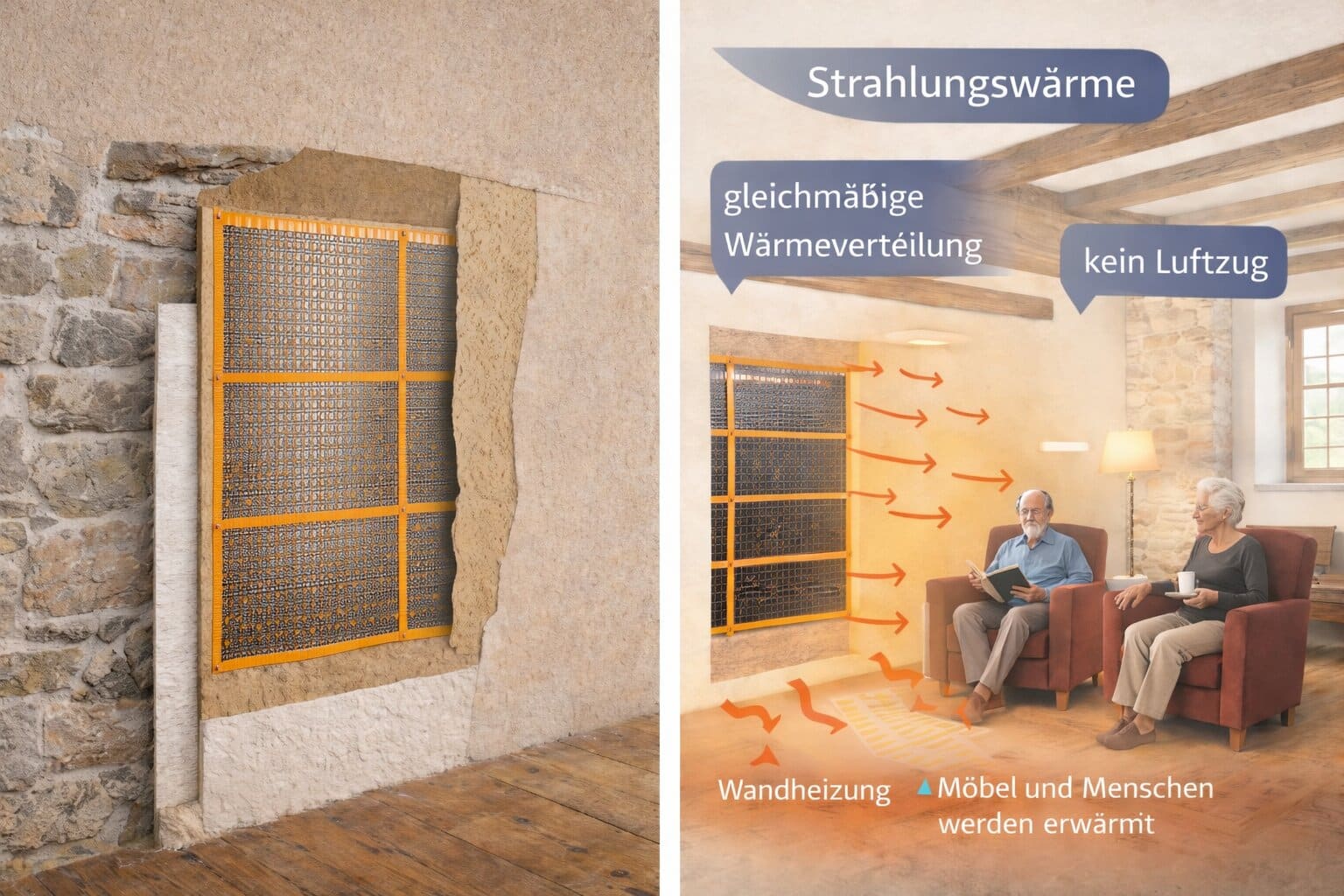
One way to heat historical buildings is with large-area heating systems in walls or ceilings. They can do without visible radiators and often require less space in the room. This allows historical rooms to be preserved without significantly altering their design.
Gentle Modernization of Existing Heating Systems
In some buildings, modernizing the existing heating system can also be sensible. Individual components are replaced or optimized without changing the entire system. This approach can be particularly useful if the existing technology is fundamentally well integrated into the building.
Combination with Interior Insulation
In historical buildings, the building envelope often plays an important role. If heat losses are reduced, the entire heating strategy can change. Carefully planned interior insulation can help reduce energy consumption without altering the building's external appearance.
Heritage Conservation and Energy-Efficient Renovation
Energy-efficient modernization is also gaining increasing importance in heritage conservation. However, it is less about a complete transformation of the building and more about a sensitive improvement of energy efficiency.
A good overview of energy-efficient refurbishment options for existing buildings can be found at Deutsche Stiftung Denkmalschutz . It shows which measures can be useful for existing buildings and how owners can be supported in their planning.

This page belongs to our topic area Heating old buildings without radiators . There we show various heating solutions for existing buildings - also for sensitive buildings such as listed buildings, where the historic building fabric should be interfered with as little as possible.
Conclusion: Every Heating System in Heritage Conservation Requires an Individual Solution
There is no blanket heating solution for listed buildings. Each property has its own structural, technical, and legal framework conditions. Therefore, it is particularly important to analyze the existing structure precisely and develop a heating strategy that suits the building.
Careful planning helps to combine both heritage conservation and the desire for modern heating technology.
Questions about Heating in a Listed Building?
If you are unsure which heating solution is possible in your building, please feel free to send us a short inquiry.
Request Non-Binding ConsultationFrequently Asked Questions about Heating in a Listed Building
Is a new heating system permitted in a listed building?
Generally, yes. However, changes often need to be coordinated with the heritage conservation authority, especially if they affect the building's external appearance.
Which heating systems are particularly suitable for historical buildings?
Solutions that can be integrated inconspicuously into the building and do not require major structural changes are often sensible.
Can a listed building be energetically modernized?
Yes, but usually gradually and with particular consideration for the historical substance. Planning should therefore always be carried out together with specialists.