Green Steel Home – Innovative house with carbon heating

Green Steel Home – Innovative house with carbon heating


Our partner Green Steel Home offers a new type of energy-efficient home that relies entirely on sustainable materials and innovative technology.
In combination with our state-of-the-art carbon heating system, this creates a future-proof living concept.

Experience the Green Steel Home in 2 minutes

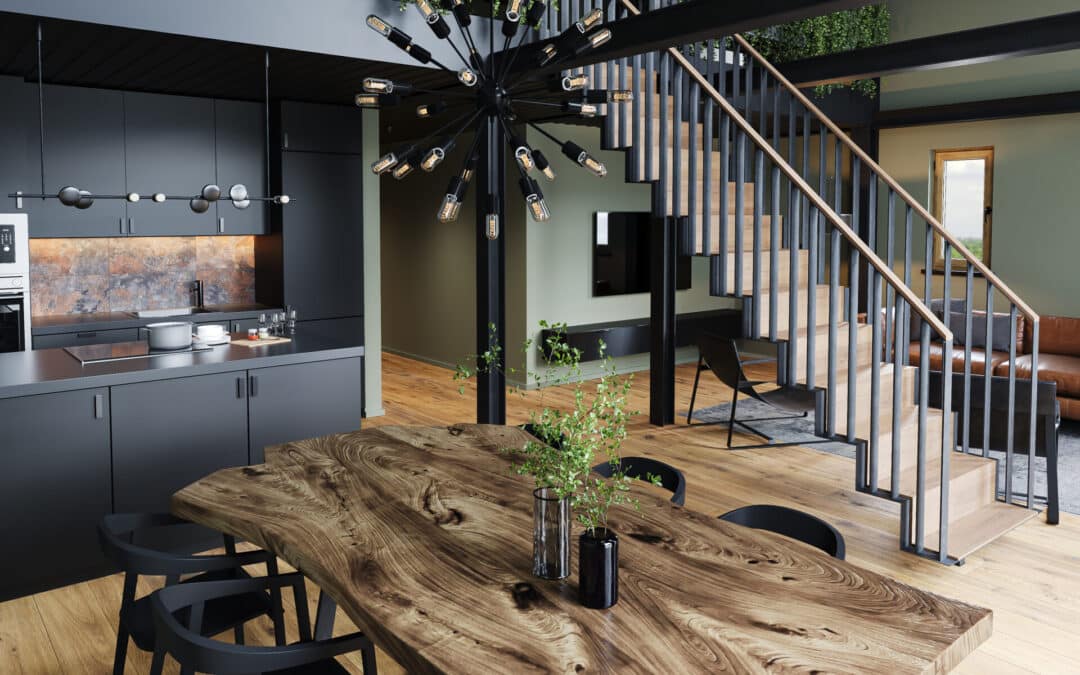
Green Steel Home is an innovative building concept that redefines sustainable and future-oriented living. At a time when environmental awareness and energy efficiency are becoming increasingly important, Green Steel Home relies on a combination of state-of-the-art steel construction and environmentally friendly technology. The result is homes that are not only aesthetically pleasing and functional, but also meet the highest standards of sustainability and energy efficiency.

The basis of a Green Steel Home is the robust and durable steel construction. Steel offers numerous advantages over traditional building materials such as wood or concrete: It is particularly resistant to weathering, pests and fire, thus guaranteeing a long service life for the building. In addition, steel can be 100% recycled, which significantly reduces the ecological footprint of the house. Thanks to the modular design of the steel construction, the houses can be flexibly planned and individually adapted to the needs of the residents. This enables tailor-made living solutions – from small, efficient single-family homes to large, modern multi-generation houses.

Another central component of the Green Steel Home is the ultra-modern carbon heating system. This innovative heating technology uses carbon fibers to generate heat efficiently and sustainably. Compared to conventional heating systems, the carbon heating system is particularly energy-efficient as it reacts quickly and can heat individual rooms in a targeted manner. The minimal energy consumption not only cuts heating costs, but also significantly reduces CO₂ emissions – a decisive contribution to climate protection. More information on carbon heating

The house is also equipped with intelligent building technology that optimizes energy management. Sensors measure temperature, humidity and CO₂ levels so that the heating and ventilation systems can be controlled automatically. This ensures a healthy and pleasant indoor climate while keeping energy consumption to a minimum. Solar technology or other renewable energy sources can be easily integrated, making the Green Steel Home virtually self-sufficient.

Last but not least, the Green Steel Home impresses with its sustainable construction method and short construction times. The prefabricated steel modules are produced in the factory and assembled quickly and precisely on the construction site. This not only reduces the construction effort and the associated costs, but also minimizes noise, dirt and construction waste on site. At the same time, quality and precision are maintained at the highest level.

Advantages at a glance:

  • 🏡 Robust and durable steel construction: for maximum stability and safety.

  • ⚡ Innovative carbon heating: high energy efficiency with low CO₂ emissions.

  • 🌱 Sustainable materials and recycling: minimizing the ecological footprint.

  • 🔧 Modular and flexible design: adaptable to individual living requirements.

  • 💡 Intelligent home technology: Automated energy management for optimum living comfort.

  • ⏱️ Short construction times: Fast assembly thanks to prefabricated modules.

  • ☀️ Renewable energies: Integration of solar and other sustainable systems possible.

  • 🌬️ Healthy indoor climate: thanks to modern ventilation and sensor systems.

Green Steel Home stands for a new era of building in which innovation, design and sustainability go hand in hand. It is the perfect solution for people who value future-proof living and want to reduce their ecological footprint. The combination of state-of-the-art technology, environmentally friendly materials and individual design creates dream homes that offer both maximum comfort and make a positive contribution to our planet.

Why Green Steel Home?

  • 🏡 S ustainable steel construction – durable, robust and resource-saving.
  • Innovative carbon heating – maximum efficiency with minimum energy consumption.
  • 🌱 Minimal CO₂ footprint – for environmentally friendly and future-proof living.

➜ Configure Green Steel Home now

Find out more at www.green-steel-home.de

Insulate living space with Aerogel

Insulate living space with Aerogel

Insulate your living space with Aerogel!

Efficient thermal insulation for your home

The Insulate living space with Aerogel is an advanced method of insulating your home efficiently. Here is some important information:

  1. What is aerogel?

    • Aerogel is an extremely light and porous material that originally came from the aerospace industry.
    • It has excellent thermal insulation, even though it takes up very little volume.
    • Aerogel consists of a network of tiny, air-filled cavities that greatly reduce heat transfer.
  2. Advantages of insulating living spaces with Aerogel:

    • Excellent thermal insulation: Aerogel has a very low thermal conductivity (only around 0.013 W/(mK)). This allows you to achieve effective insulation even with thin layers.
    • Space-saving: Compared to conventional insulation materials, aerogel requires less space. So you lose less living space.
    • Good sound insulation: Aerogel not only reduces heat loss, but also noise.
    • Flexibility: Aerogel insulation boards can be installed in angled rooms, behind radiators and on curves.

Thermal insulation with aerogel can be extremely efficient, even with comparatively low insulation thicknesses. To calculate the equivalence between 10 mm aerogel and polystyrene, we use the following formula:

  • Thermal conductivity of aerogel:
    • The thermal conductivity of aerogel is around 0.016 W/(mK) .
  • Thermal conductivity of polystyrene:
    • The thermal conductivity of polystyrene (EPS) varies depending on density and type, but is typically between 0.030 and 0.040 W/(mK).

Now we use the known values:

  • Insulation thickness with polystyrene = 10mm x 0.040 W/(mK)
    0.016 W/(mK) = 25mm

ConclusionIf you want to replace 10 mm of aerogel with polystyrene, you need a polystyrene insulation thickness of approx. 25 mmto achieve similar thermal insulation.

Insulate living space

with interior insulation offers numerous advantages when it comes to making your home more energy-efficient and comfortable. Here are some of the main reasons why you should consider internal insulation:

  1. Energy savings: Well-designed interior insulation can significantly reduce your heating costs. By reducing heat loss through the interior walls, the room temperature remains comfortable without you having to constantly turn up the heating.
  2. Preserving the historical character: If you own an older building with stucco, half-timbering or ornamental painting, internal insulation makes it possible to insulate without affecting the external façade. This way you can preserve the charm and beauty of your home.
  3. Protection against mold growth: Interior insulation regulates the temperature and humidity in the room. This prevents the formation of mold. This is particularly important when replacing old windows with airtight models, as the indoor humidity changes and condensation can form in cold areas.
  4. No scaffolding required: In contrast to external insulation, internal insulation does not require scaffolding. This makes implementation easier and more cost-effective.
  5. Step-by-step approach: You can proceed room by room instead of insulating the entire house at once. This enables flexible implementation according to budget and schedule.
  6. Health benefits: Well-insulated interiors contribute to health prevention. The regulated room temperature and humidity create a pleasant living climate.

All in all, interior insulation offers an effective way to modernize your home, save energy and preserve its historic character at the same time.

Reduce energy costs with interior insulation

Reduce energy costs with interior insulation

Reduce energy costs with interior insulation!

Saving energy with insulation explained simply.

Prices for heating oil and gas are going through the roof just in time for the dark and cold season. The price of natural gas rose by more than 170.5 percent and the price of crude oil by 63.6 percent. An end to inflation is not in sight.

How can I save energy?

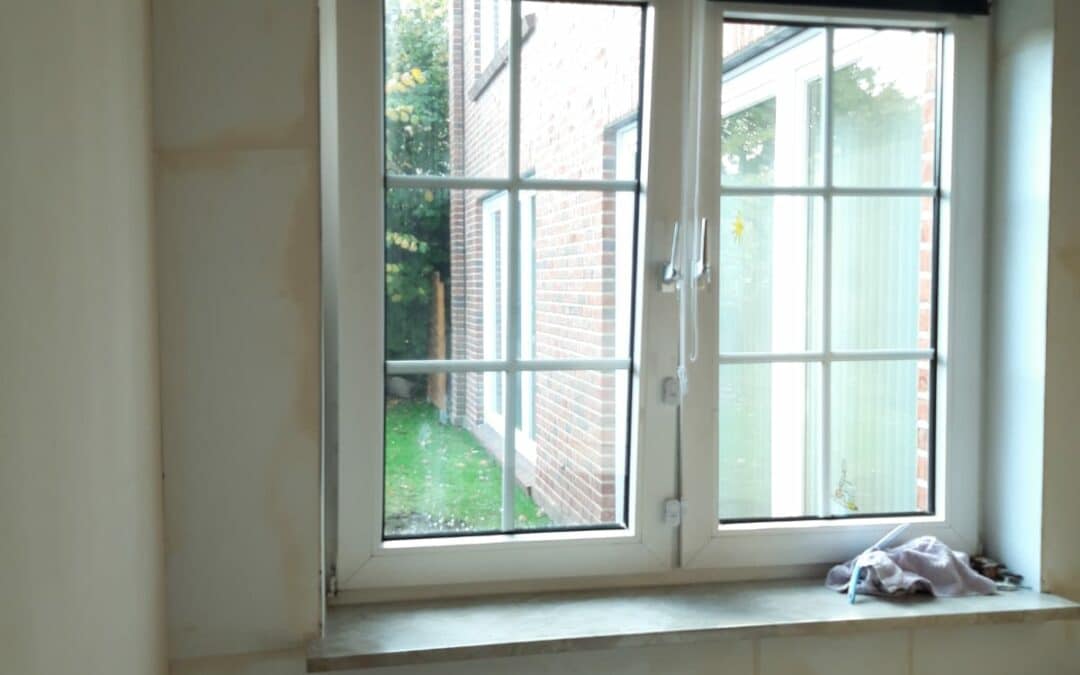
A warm home doesn’t have to be expensive. I simply save a lot of energy by heating less! Unfortunately, this is not so easy, especially in older, poorly insulated houses. Cold and uninsulated external walls transmit an unpleasant cold radiation into the entire room and it is uncomfortable. I lose my expensively generated heat through the uninsulated exterior walls and often also through the poorly insulated sloping ceilings!

What do I have to do to prevent heat loss?

It would be nice if I could quickly and easily stick insulation to the outside walls or the sloping roof, almost as easily as wallpapering. You think that’s impossible.

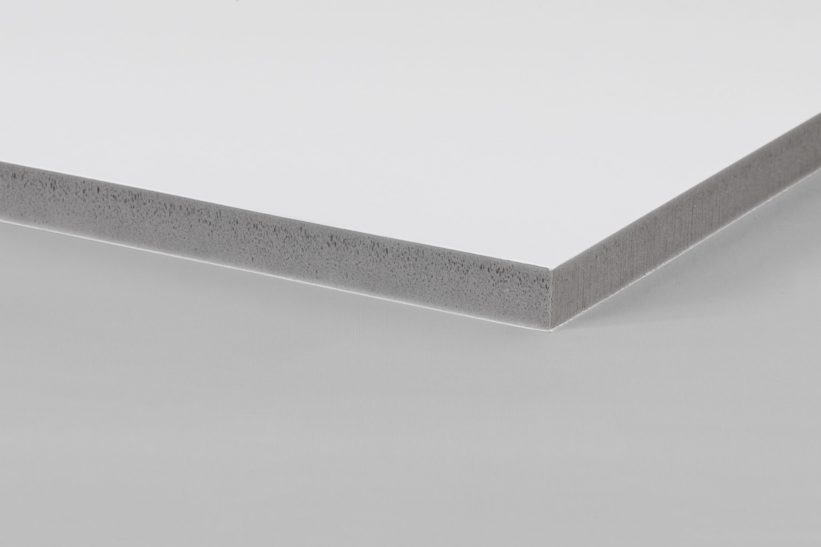
With our Superwall insulation board in 10 mm thickness with dimensions of 125 cm x 80 cm, insulating is child’s play! The panel has an insulating PU core that is laminated on both sides with a thin layer of aluminum and high-quality fleece cardboard. The integrated aluminum foil acts as a vapor barrier and prevents moisture from forming between the panel and the wall. The thermal conductivity is 0.22 W/mK.

How does that work? Reduce energy costs with interior insulation!

For insulation, the Superwall
interior insulation board
is glued to the wall or ceiling. If the wall or ceiling is made of plasterboard or Fermacell, the Superwall can also be screwed in place. The outside of the Superwall insulation consists of ready-to-paint fleece cardboard on both sides and can be painted immediately in the color of your choice. But any type of wallpaper can also be used. The board is also suitable for bonding tiles.

Another special feature is the high insulating effect of the Superwall, which is only 10 – 20 mm thick. With just 10 mm of insulation, heat loss is reduced by up to 40 percent! The integrated vapor barrier on both sides of the panel prevents the formation of mold!

Start saving energy with Superwall today and significantly reduce your oil or gas bills.

Another free side effect is a completely new indoor climate and you experience a new level of comfort! to the store


Saving with heating paint

Saving with heating paint

Saving with a heating coat is no longer a wish, but a reality thanks to the new GEG (Building Energy Act).

The new Act on Energy Conservation and the Use of Renewable Energies for Heating and Cooling in Buildings (Building Energy Act – GEG) brings together the Energy Conservation Act (EnEG), the Energy Conservation Ordinance (EnEV) and the Renewable Energies Heat Act (EEWärmeG). The aim of the draft law is to standardize energy-saving legislation for buildings in order to create a simpler regulatory framework for low-energy building standards. All innovations for the use of electric panel heating systems in the Building Energy Act (GEG) from 01.11.2020 can be found here in the PDF file for download

The advantages of electric panel heating.

Electric panel heating is ideally planned as ceiling heating. This sounds a bit strange at first, as heat rises upwards and the room would not be heated “properly”. However, we do not use “normal” heating, but a heating coating with carbon heating paint. The carbon heating color generates infrared radiant heat with 48 volts of low voltage. In other words, the heat “falls” from the ceiling. The radiant heat does not heat the air but all the people, objects, walls, floor, etc. in the room. The heating on the ceiling is operated at a temperature of 32°C – 35°C and is therefore very economical in terms of energy consumption.

Saving with heating paint made easy!

For the first time, the new Building Energy Act now provides opportunities for the granting of subsidies. In new builds, full electric heating is eligible if the primary energy requirements are met. The corresponding certificates are prepared by a certified energy consultant. However, it is not only the subsidies that are decisive, but also the efficiency of the infrared heating with carbon heating coating.

Due to the very large active heating surfaces and the high insulation standard of today’s new buildings, it is easily possible to heat a house comfortably with just 30 watts/m². Another advantage of saving with a heating coating is that the heating system is operated without a chimney and annoying radiators. There is no need for expensive recurring maintenance, as no mechanical parts such as valves, pumps or boilers are installed. A brief summary of the GEG

Renovation with insulation

Renovation with insulation

Renovierung mit Dämmung einfach erklärt.

Die ungemütliche Jahreszeit mit niedrigen Temperaturen, Regen und langer Dunkelheit ist angebrochen. Wer freut sich da nicht auf ein gemütliches und vor allem warmes Zuhause. Doch leider ist es mit der Behaglichkeit, besonders in älteren, schlecht gedämmten Häusern, nicht so besonders gut. Kalte Außenwände übertragen eine unangenehme Kältestrahlung in den gesamten Raum und es ist ungemütlich. Mit dieser Kältestrahlung ist es nicht nur ungemütlich, sondern auch die Gefahr von Schimmelbildung auf den Oberflächen oder in den Ecken ist sehr groß. Und Schimmel ist nicht nur unangenehm, sondern kann auch die Gesundheit schädigen!

Was kann ich dagegen tun?

Es wäre doch schön, wenn eine nachträgliche Dämmung genauso einfach wäre wie tapezieren. Sie meinen das ist unmöglich.
Mit unserer Superwall Dämmplatte in 10 mm Dicke mit den Abmessungen von 125 cm x 80 cm ist das Dämmen ein Kinderspiel! Die Platte hat einen isolierenden PU-Kern der beidseitig mit einer dünnen Lage Aluminium sowie einem hochqualitativen Vlieskarton kaschiert ist. Die integrierte Alufolie wirkt dabei als Dampfsperre und verhindert, dass sich zwischen Platte und Wand Feuchtigkeit bilden kann. Die Wärmeleitfähigkeit beträgt 0,22 W/mK.

Wie geht Renovierung mit Dämmung?

Bei der Renovierung mit Dämmung wird die Innendämmplatte an die Wand oder Decke geklebt und nur die gefasten Kanten werden gespachtelt. Da die Oberflächen der Superwall Dämmung aus malerfertigem Vlieskarton bestehen, kann die Fläche entweder sofort mit der Wunschfarbe gestrichen werden, aber auch jede gewünschte Tapete kann verwendet werden. Ebenso ist die Platte für das verkleben von Fliesen geeignet.

Eine weitere Besonderheit ist die hohe Dämmwirkung der nur 10 – 20 mm dicken Superwall. Bei nur 10 mm Raumverlust verringert sich der Wärmeverlust um bis zu 40 Prozent. Durch die integrierte Dampfsperre auf beiden Seiten der Platte ist Schimmelbildung ausgeschlossen!

Starten Sie Ihre Renovierung mit Superwall und erleben die neue Behaglichkeit! zum Shop

0
    0
    Warenkorb
    Dein Warenkorb ist leer.Zurück zum Shop