
Heat pump not possible in existing buildings? Which alternatives are truly sensible
Many property owners today first plan with a heat pump – and only in the second step realize that their own building is not ideally suited for it. Especially in existing buildings, this is not uncommon. Missing large heating surfaces, challenging floor plans, high necessary system temperatures, historical preservation regulations, or insufficient space for outdoor units and technology lead to a heat pump being implementable only with great effort or not at all sensibly.
One thing is particularly important then: "Heat pump not possible in existing buildings" does not mean that no modern heating solution is possible. On the contrary – especially in existing buildings, it is worth looking at alternatives that better suit the existing building structure, the room geometry, and the renovation goal.
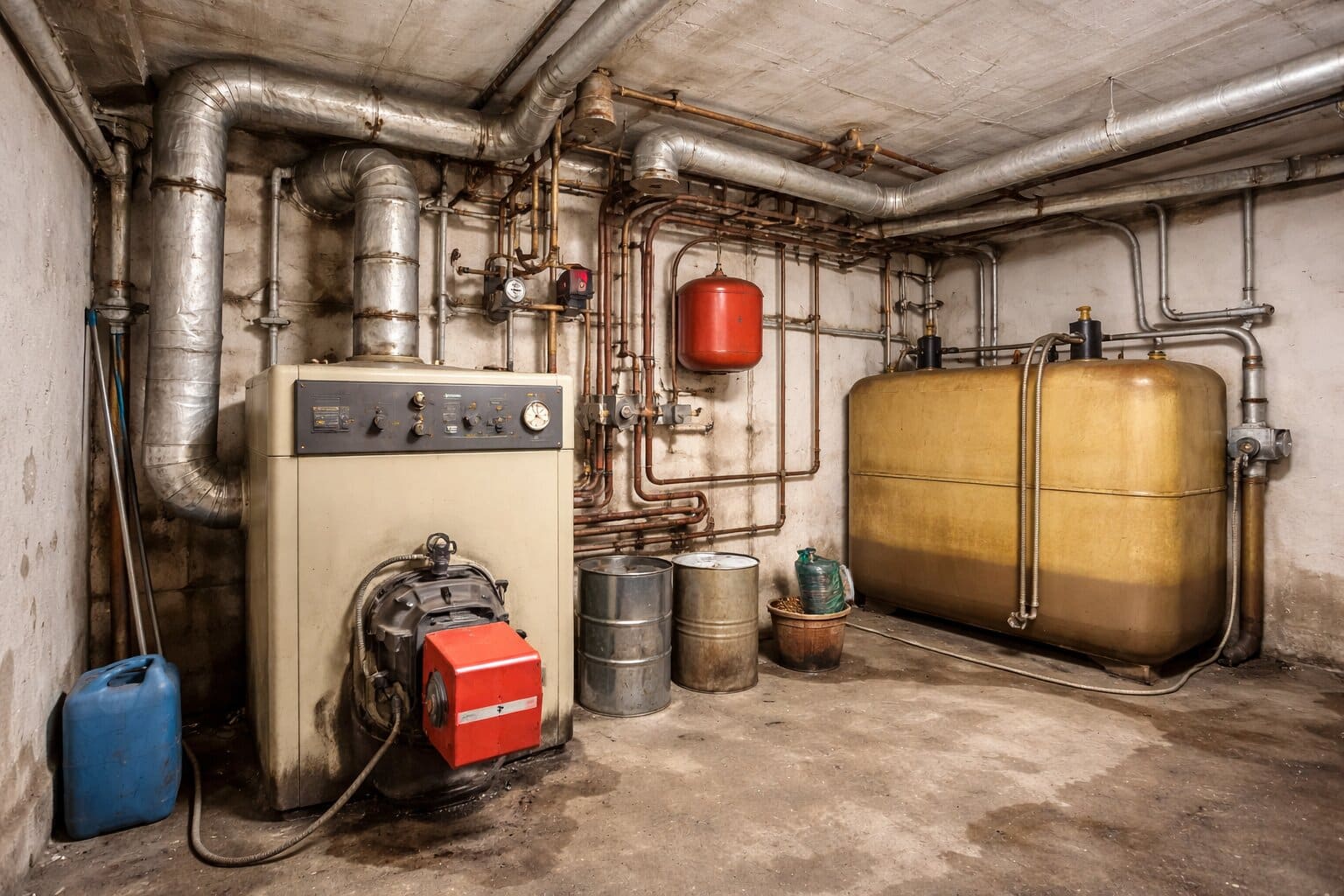
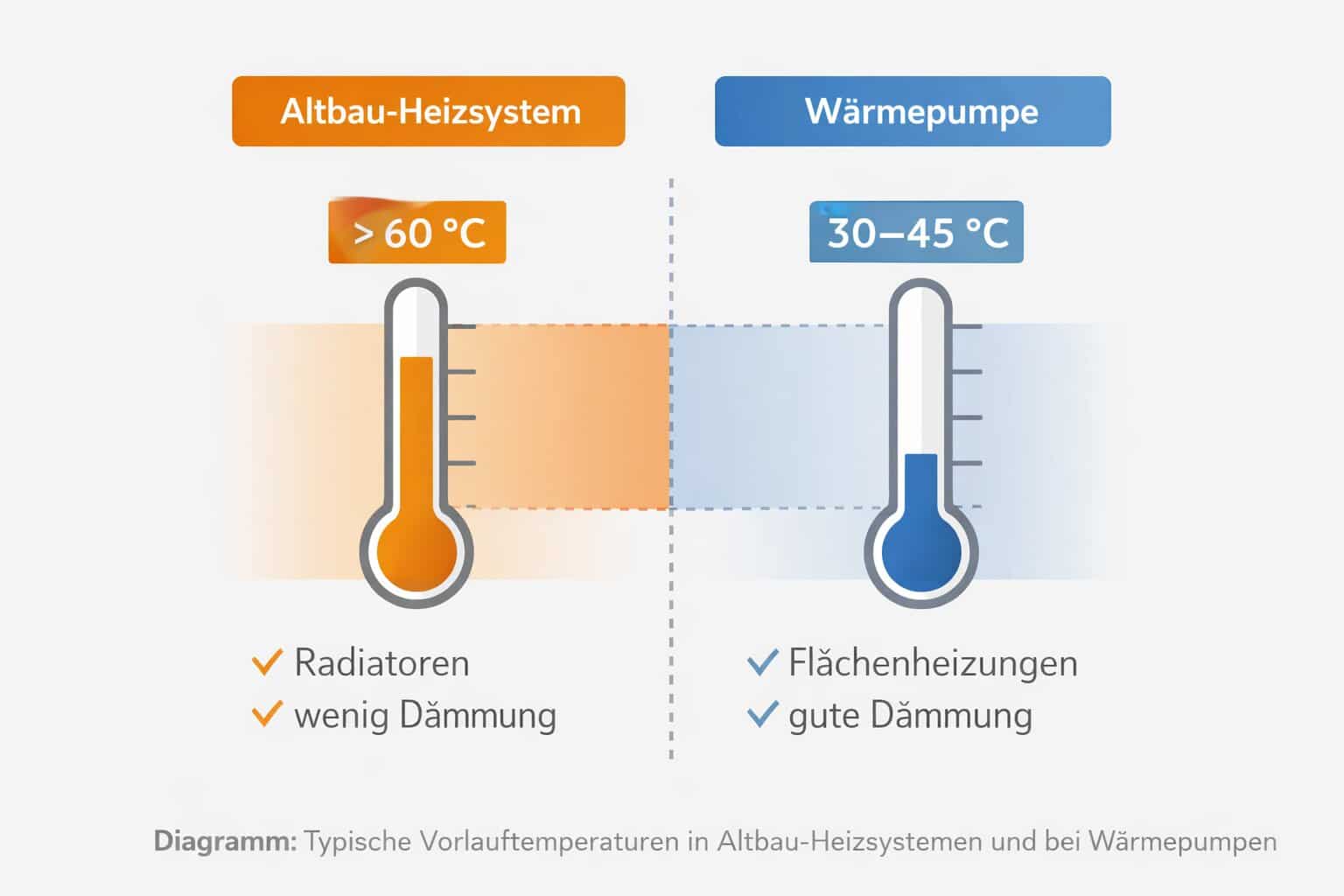
In many existing buildings, classic heating systems with relatively high flow temperatures are still in operation. The old radiators and pipe systems were originally designed for heating water with temperatures of approximately 60 to 75 °C to flow through the system. These high temperatures ensure that sufficient heat is released into the room even at cold outdoor temperatures. This quickly leads to the conclusion that a heat pump is not possible in existing buildings.
This is precisely where a typical challenge for heat pumps in existing buildings lies. Heat pumps operate particularly efficiently when they are run at significantly lower system temperatures – often in the range of approximately 30 to 45 °C. For these lower temperatures to be sufficient, the building either needs very large heating surfaces or a significantly reduced heating load.
However, in many older buildings, these conditions are not met, and a heat pump in existing buildings is not possible. The existing radiators are relatively small, the building envelope is only partially insulated and the heating system was originally designed for higher temperatures. In such cases, either the entire heating surface structure would have to be changed or a completely new heating concept would have to be planned.
This is precisely why it is often worthwhile in existing buildings to also consider alternative heating solutions without a heat pump – especially systems that work with large-area heat emission and can be better integrated into the existing building structure.
Heat pump not possible in existing buildings – what does that mean specifically?
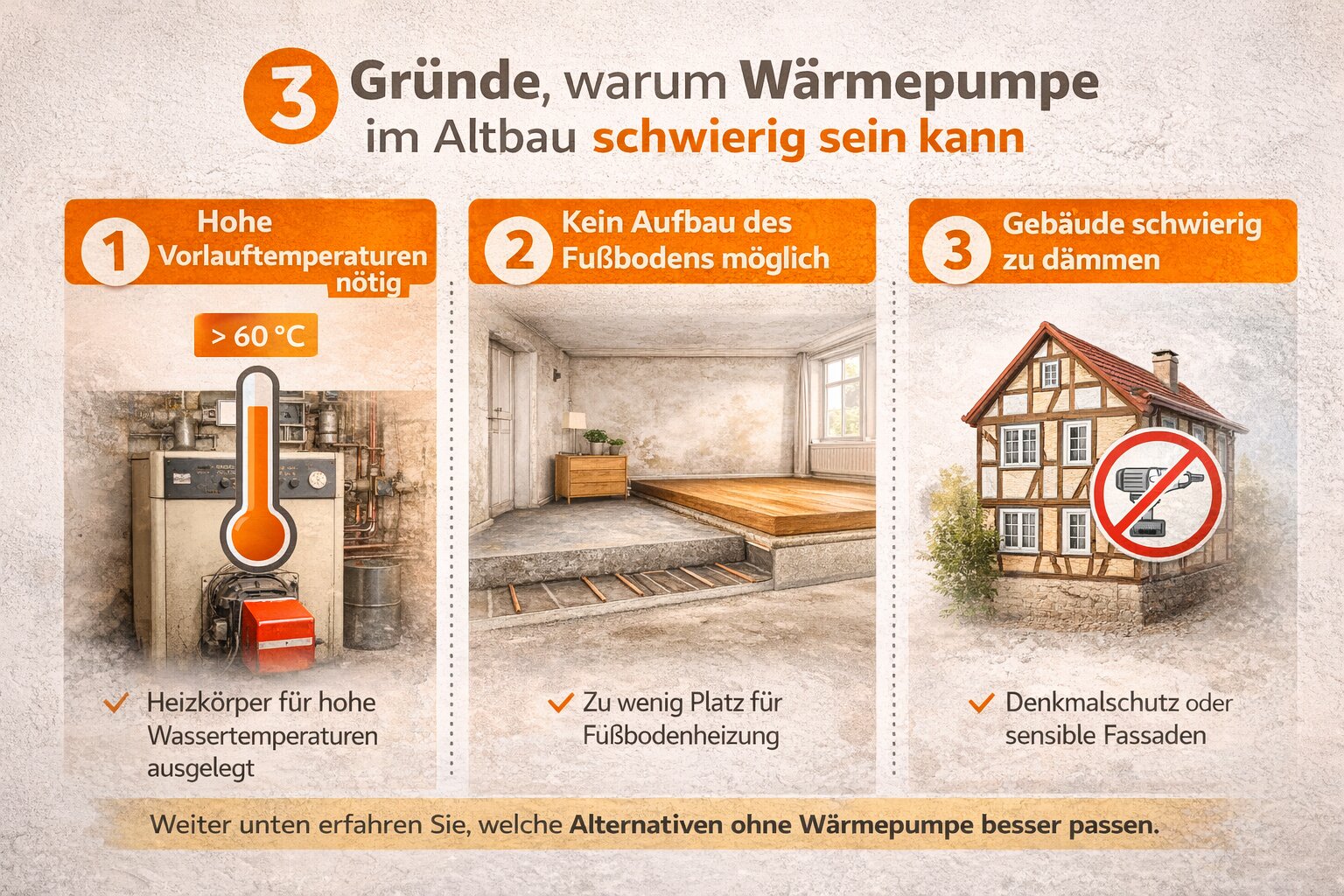
In public discourse, the heat pump is often presented as the standard solution. In many buildings, it is. In existing buildings, however, suitability depends heavily on the actual conditions. If large heating surfaces are missing, high flow temperatures are necessary, or the building envelope can only be improved to a limited extent, the technical and economic effort quickly increases.
- Insufficiently large areas for low system temperatures are available
- The floor should not be opened or rebuilt
- Ceiling height is limited
- Outdoor units are problematic aesthetically or structurally
- Historical preservation or sensitive facades restrict implementation
- The planned renovation is to be carried out gradually and not as a complete overhaul
- Many existing building heating systems operate with flow temperatures above 60 °C.
Precisely in such situations, a solution is needed that does not just look good on paper, but actually works in the real building.
Alternative heating solutions without a heat pump
If a heat pump does not seem sensible in an existing building, the decision should not be made impulsively. A brief technical preliminary check is useful, clarifying the most important questions:
- What is the actual heating load?
- Which areas are available for heat emission?
- How much intervention into the existing structure is desired or possible?
- Is a phased renovation planned?
- How much does insulation influence overall economic viability?
Only when these points have been clarified can a serious assessment be made as to which alternative to a heat pump in an existing building is truly sensible. This is often where it becomes clear that surface heating in combination with a targeted insulation strategy can have very convincing advantages in existing properties.
This page is part of our guide on Old Building Heating without Radiators . There you will find further solutions for typical challenges in existing buildings – from missing underfloor heating to historical preservation and alternative heating systems, when a heat pump is not sensibly implementable.
Conclusion
An unsuitable heat pump is not a setback, but an indication that the building needs a different solution. Those who take the initial situation in existing buildings seriously often find modern alternatives that better suit the substance, the available space, and the desired comfort. The decisive factor is not to consider just one technology, but the entire property.
Especially when there is no underfloor heating, no screed is to be installed, or the heat pump fails due to structural limitations, object-specific planning is worthwhile.
Have us check which alternative suits your existing building
Get a concrete assessment of which heating solution is technically and economically sensible for your building.
Or by email: kontakt@rebotherm.de
Frequently Asked Questions
Does "heat pump not possible in existing buildings" mean the house is technically unsuitable?
Not necessarily. Often it only means that the effort would be too high in relation to the building situation or that other solutions are more sensible for the specific property.
Which alternative is most frequently interesting in existing buildings?
That depends on the initial situation. However, surface heating without classic floor construction, i.e., solutions via walls or ceilings, are particularly often relevant.
Can internal insulation influence the choice of heating system?
Yes. When heat losses are reduced, the heating load decreases. This can significantly improve the economic viability and technical feasibility of alternative heating solutions.
What is the first sensible step?
A successful heating modernization in an existing building should always be considered in the context of the entire building situation. In addition to the choice of heating system, insulation, windows, heating surfaces, and the overall energy concept also play an important role.
A good overview of possibilities for energy-efficient renovation is offered, for example, by the "Die Hauswende" renovation campaign by the German Energy Agency (dena) . The initiative informs homeowners about various measures for building modernization – from efficient heating technology to thermal insulation, funding opportunities, and energy consulting.
Especially in existing buildings, it often becomes clear that not just a single heating system should be considered, but a coordinated overall concept of heating technology, insulation, and building optimization is sensible.
Are you unsure which heating solution makes sense for your existing building? Many property owners face precisely this question.
Inquire about existing building heating solutions